
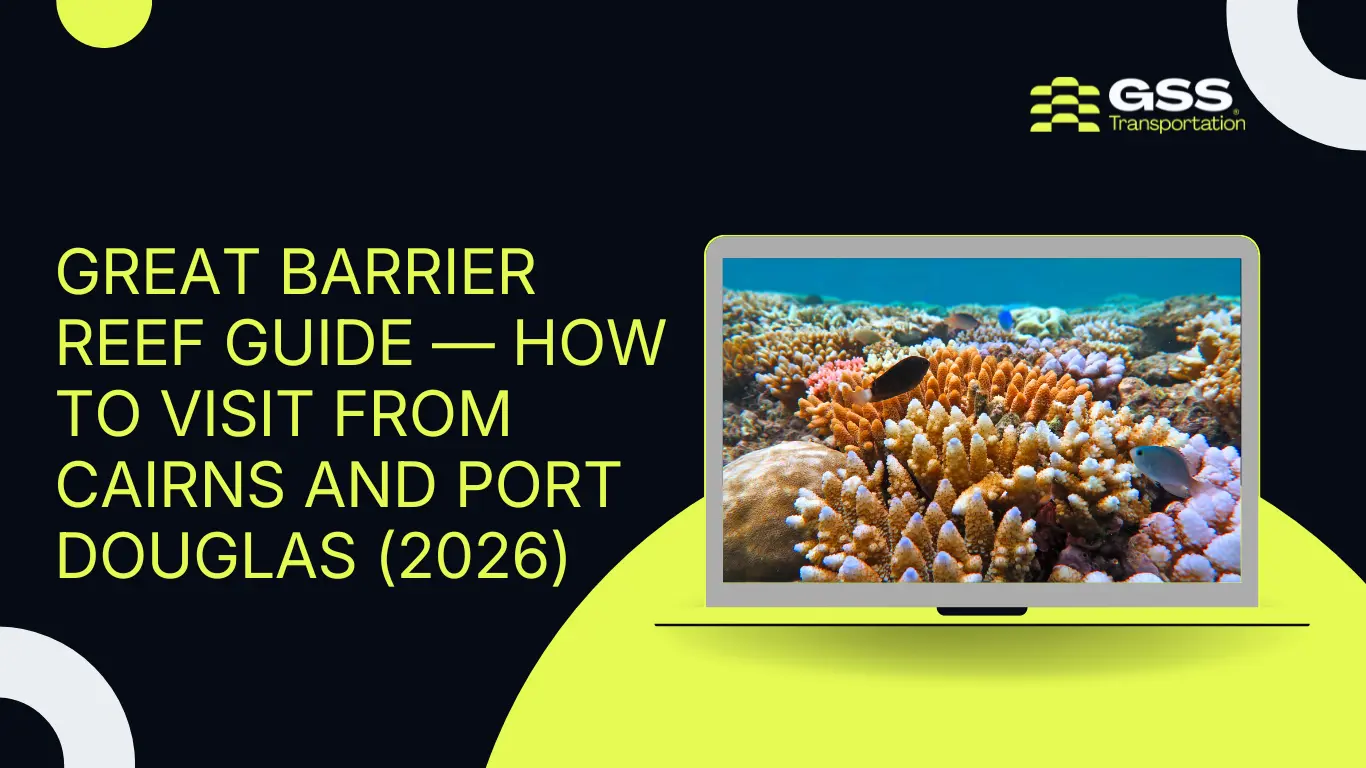
The Great Barrier Reef is the world’s largest coral reef system and the single most common reason visitors fly into Cairns Airport. It stretches for approximately 2,300 kilometres along the Queensland coast, but for most visitors the practical question is much simpler: which boat do I get on, from which port, and what should I expect when I get there?
This guide answers those questions with 2026 pricing, a clear comparison between Cairns and Port Douglas departures, an honest breakdown of what different experience levels will get out of a reef trip, and the practical details that most reef tour marketing glosses over. It is written for people who have not been before, as well as for returning visitors who want to know what has changed.
How Far Is the Reef from Cairns?
The Great Barrier Reef World Heritage Area is not a single reef — it is a complex of approximately 2,900 individual reefs and 900 islands spread across 348,000 square kilometres. The section accessible from Cairns and Port Douglas is the Tropical Far North section, which includes some of the most visited and well-maintained reef sites in the entire system.
From Cairns Reef Fleet Terminal, most outer reef sites are 60 to 90 minutes away by high-speed catamaran. From the Crystalbrook Marina in Port Douglas, the Agincourt Ribbon Reefs — the Outer Reef sites specific to Port Douglas operators — are about 90 minutes offshore. The Port Douglas departure reaches a genuinely outer, ribbon-type reef that is generally considered to have better coral density and visibility than the reef sites reachable from Cairns.
Closer options exist in both directions. Green Island and Fitzroy Island are coral cay islands with reefs accessible directly from their shores, approximately 45 minutes from Cairns. The Low Isles, accessible from Port Douglas, are small coral cays 15 kilometres offshore with calm, sheltered water. Both are better suited to families with young children than the deeper-water Outer Reef trips.
Cairns vs Port Douglas — Which Departure Is Better?
This is the question most visitors ask first, and the honest answer depends on what you are looking for.
Factor | Cairns departure | Port Douglas departure |
Reef quality | Good — Outer Reef sites (Moore Reef, Norman Reef, Saxon Reef area) | Excellent — Agincourt Ribbon Reefs are considered the premium outer reef for this section of the coast |
Travel time to reef | 60 to 75 min by high-speed cat | 90 min — longer crossing but to better sites |
Crossing conditions | Generally calmer inside the lagoon | More open water — can be rougher on the outbound leg |
Number of operators | Larger choice — 10+ operators at Reef Fleet Terminal | Fewer operators but all established names |
Departure point | Cairns Reef Fleet Terminal, Esplanade | Crystalbrook Superyacht Marina, short walk from Macrossan Street |
Best for | Non-swimmers, families, first timers wanting calmer conditions, visitors based in Cairns | Certified divers, experienced snorkellers, visitors based in Port Douglas, those prioritising reef quality |
Iconic operator | Great Adventures, Silverswift, Divers Den, Pro Dive Cairns | Quicksilver Cruises, Calypso Outer Reef, Sailaway |
If reef quality is the priority and you can handle 90 minutes of open water, Port Douglas is the better departure point. If you are travelling with young children, prone to seasickness, or based in Cairns with limited time, the Cairns Outer Reef operators serve excellent reef sites with a shorter and calmer crossing.
Inner Reef vs Outer Reef — What Is the Difference?
The distinction matters more than most first-time visitors realise before they go.
Inner Reef / Island Sites
- Green Island: a coral cay island 27 km northeast of Cairns. Reef accessible directly from the beach and by glass-bottom boat. Suitable for non-swimmers and young children. Coral density has reduced in recent decades and the reef around the island is not as pristine as Outer Reef sites.
- Low Isles (Port Douglas): two small coral cay islands 15 km offshore with calm, sheltered lagoon water. Excellent for snorkelling and very safe for families. Not a deep-water reef experience.
- Fitzroy Island: 29 km from Cairns, a continental island with surrounding fringing reef. Good snorkelling from the beach. A quieter, less commercial alternative to Green Island.
Outer Reef
The Outer Reef is the outer edge of the continental shelf, where the reef wall drops into deep water and coral formation is at its most dense and diverse. Visibility at Outer Reef sites is typically 15 to 25 metres on a clear day. Fish, sea turtles, reef sharks, and a variety of coral species are consistently seen on well-managed sites. Water depth at most snorkelling areas is 3 to 10 metres.
Outer Reef trips from Cairns primarily access sites such as Moore Reef (via Sunlover’s pontoon), Norman Reef, and Saxon Reef. Port Douglas Outer Reef trips access the Agincourt Ribbon Reefs, which are thin strip reefs running parallel to the coast along the outer edge of the continental shelf. The Ribbon Reefs are widely considered the most pristine section of reef accessible by day trip from the Queensland coast.
Major Operators — Who to Book With
There are more than a dozen reef tour operators departing from Cairns and Port Douglas. The established names have consistent records of reef quality, safety, and guest experience. Below are the main ones worth knowing.
From Cairns — Reef Fleet Terminal
Operator | Reef site and style | Best for |
Great Adventures | Moore Reef outer pontoon — glass bottom boat, underwater observatory, snorkelling, optional diving. Pontoon has waterslide. | Families, non-swimmers, first-timers |
Sunlover Reef Cruises | Moore Reef pontoon — similar facilities to Great Adventures. Different boat, same reef area. | Families, general visitors |
Silverswift | Three Outer Reef sites in one day, high-speed catamaran. 3 certified dives available. | Certified divers and serious snorkellers |
Divers Den | Outer Reef day trip from Cairns Marlin Marina. Snorkel and dive options. Liveaboard also available. | Divers and mixed snorkel/dive groups |
Pro Dive Cairns | Outer Reef, certified and introductory diving focus. Smaller groups. | Certified divers |
Passions of Paradise | Departs Palm Cove and Cairns. Sailing catamaran to outer reef. Smaller group, more personal. | Couples, small groups, eco-conscious travellers |
From Port Douglas — Crystalbrook Marina
Operator | Reef site and style | Best for |
Quicksilver Cruises | Agincourt Ribbon Reefs — large catamaran to outer pontoon with underwater observatory, semi-submarine, snorkelling. Helicopter option available. | Families, non-swimmers, and those wanting maximum facilities |
Calypso Outer Reef | Agincourt Ribbon Reefs — smaller vessel than Quicksilver, more personal. Snorkelling and introductory diving. | Those wanting a less crowded reef experience |
Silversonic | Three Agincourt Ribbon Reef sites, certified diving focus. High-speed catamaran. | Certified divers based in Port Douglas |
Sailaway Port Douglas | Outer Reef on a sailing catamaran. Smaller group. Two reef sites. | Couples, small groups seeking a less commercial experience |
Wavedancer | Low Isles day trip — sailing catamaran, calmer inner reef experience. | Families, non-swimmers, those prone to seasickness |
2026 Reef Tour Price
Prices below are approximate 2026 figures based on operator websites and published data. A fuel surcharge introduced from April 2026 applies to some operators — adults typically $4 to $10 per person for day trips, noted separately from the base fare. Verify current prices directly with operators before booking. Great Barrier Reef Tours aggregates current availability across multiple operators if you want to compare.
Trip type | Adult from | Child from | Notes |
Inner reef / Green Island | $112 | $60 | Shorter crossing, suitable non-swimmers |
Outer Reef snorkel (Cairns) | $180 to $220 | $100 to $130 | Includes gear, lunch, guided snorkel tour |
Outer Reef snorkel + intro dive (Cairns) | $220 to $280 | N/A | Intro dive additional $100 to $150 est. |
Outer Reef certified dive (Cairns) | $250 to $380 | N/A | 3 dives Silverswift-style; includes equipment |
Low Isles (Port Douglas) | $180 to $220 | $110 to $130 | Calmer water, sailing catamaran |
Agincourt Reef — Quicksilver | $265 to $295 | $150 to $180 | Outer pontoon, helicopter option available |
Agincourt Reef — smaller operators | $220 to $260 | $130 to $160 | Calypso, Sailaway — smaller groups |
Liveaboard (2 to 3 nights) | From $900 per person | N/A | Multiple dives per day, overnight on reef |
Best Time to Visit the Reef
Month/Period | Conditions | Notes |
June to August | Best | Dry season. Clear water, good visibility (15-25m). Low humidity. Minimal rain affecting boat trips. Slightly cooler air temperatures (24-28°C). |
September to October | Excellent | Still dry season. Water warming slightly. Excellent visibility. Can be the best months for reef fish activity. |
April to May | Good | Transitioning out of wet season. Some days of reduced visibility after rain. Good value for accommodation. |
November to March | Variable | Wet season. Afternoon storms common. Visibility can drop after heavy rain. Marine stinger season. Most trips still operate. Some days genuinely excellent. |
December to January | Challenging | Peak wet season. Higher chance of tours impacted by weather. Cyclone risk (moderate). Visibility most variable. |
The Great Barrier Reef Marine Park Authority has current reef health monitoring data at gbrmpa.gov.au. For visibility and sea condition forecasts, the Bureau of Meteorology Marine Forecast for Queensland is the most reliable daily reference.
Practical Tips for First-Timers
- Book ahead — reef tours are one of the first things to sell out during peak season (June to October). Many operators recommend booking at least a week ahead; during Queensland school holidays, two to three weeks.
- Bring or buy a rash vest — full sun exposure on the water for a full day is significant. Most operators sell or hire rash vests on board, but bringing your own is cheaper.
- Seasickness — the crossing to the Outer Reef from Cairns (60 to 75 min) or Port Douglas (90 min) involves open water, and conditions vary. If you are prone to motion sickness, take medication before you board rather than waiting until you feel unwell on the boat. Scopoderm patches work well for a full-day trip.
- Non-swimmers can still access the reef — most large operators have glass-bottom boat tours, semi-submarine or underwater observatory experiences, and ocean walker (helmet diving on the platform) for guests who do not snorkel or swim.
- Camera and waterproof housing — GoPro-compatible underwater housings are available to hire from most operators. Your smartphone in a waterproof case can capture decent reef footage at 1 to 3 metre depths.
- Introductory diving — you do not need a certification to try scuba diving on the reef. Most Outer Reef operators offer ‘introductory’ or ‘discover’ dives with a one-on-one instructor guide. No experience is required. Minimum age is typically 12 years.
- Hotel pickup — most reef operators include hotel pickup from Cairns CBD and northern beaches accommodation as part of the fare. This typically means a coach transfer to the marina. Check at booking whether your accommodation is in the pickup zone.
Getting to Cairns Airport for Your Reef Trip
Most reef trip operators include hotel pickup from Cairns CBD and northern beaches accommodation. If you are staying in Palm Cove or Port Douglas and heading to the Cairns Reef Fleet Terminal, a pre-booked private transfer to the city is the most reliable way to make your check-in time. Boats do not wait.
Cairns Airport to Port Douglas From $179 — reef gateway town | Cairns Airport to Palm Cove From $99 — reef departure from beach | Cairns Airport to City From $49 — Reef Fleet Terminal access |
Things to Do in Port Douglas Reef operators, Four Mile Beach, Daintree | Palm Cove Travel Guide Reef access from Palm Cove beach | Complete Cairns Airport Guide Terminals, lounges, arrivals process |
Frequently Asked Questions — Great Barrier Reef Guide
No. All major reef operators offer non-swimming options — glass-bottom boats, underwater observatories at pontoon facilities, and semi-submarine tours. Some sites also offer ocean walker experiences where guests walk on the reef platform in a helmet fed with surface air. Snorkelling requires basic swimming ability; the introductory diving experience does not, as you are guided one-on-one at all times.
Typically 3 to 5 hours at the reef, depending on the operator and whether the trip visits one or two sites. The remaining time is the boat crossing each way. A full day trip departing Cairns at 8am typically returns at 5 to 5:30pm.
Sections of the reef have experienced coral bleaching events related to elevated sea temperatures, particularly in 2016, 2017, 2020, and 2022. However, the reef system covers 348,000 square kilometres and the impact is uneven. Many sections, including the Agincourt Ribbon Reefs accessible from Port Douglas and the Outer Reef sites visited by Cairns operators, remain healthy with high coral coverage. The Great Barrier Reef Marine Park Authority monitors reef health and publishes regular updates at gbrmpa.gov.au.
Snorkelling is at the water surface using a mask and snorkel — you float face-down and observe the reef below. Introductory (or discover) scuba diving uses full scuba equipment and takes you to a depth of 5 to 12 metres, where you can interact with the reef more closely. Introductory diving requires no prior experience — a brief on-board training session and one-on-one instructor guide are included.
Yes. Most reef trips accept children from age 4 or 5 for snorkelling. Glass-bottom boats and observatory tours have no minimum age. Introductory diving typically has a minimum age of 12. The Low Isles trips from Port Douglas and the inner reef island trips from Cairns (Green Island, Fitzroy Island) are the most suitable for very young children due to calmer water and shorter crossings.
Port Douglas departures reach the Agincourt Ribbon Reefs, which are considered the premium outer reef accessible by day trip from this section of the coast. Cairns departures are closer, the crossing is shorter and generally calmer, and there are more operators to choose from. For reef quality alone, Port Douglas wins. For convenience, families, and visitors based in Cairns, the Cairns departure is perfectly good.