
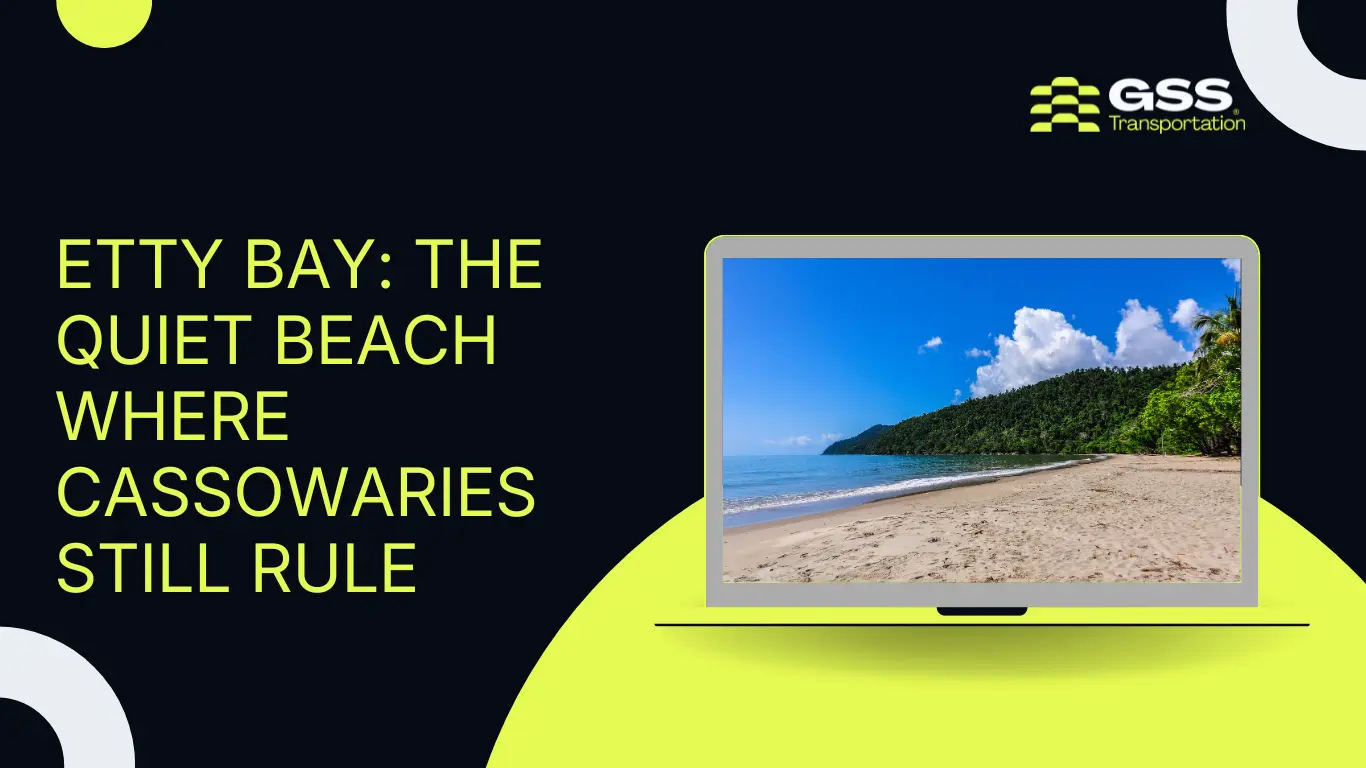
Some beaches are about swimming. Etty Bay is about who might be standing on the sand when you get there. This small, horseshoe-shaped bay on the Cassowary Coast is one of the most reliable places anywhere to see a wild southern cassowary up close, and it manages that while staying almost entirely off the standard Cairns tourist circuit.
If Josephine Falls is the adrenaline stop on a Far North Queensland day trip, Etty Bay is the one where you slow right down, and where understanding what you’re looking at matters as much as seeing it.
The Bird Behind the Beach’s Reputation
The southern cassowary is Australia’s heaviest flightless bird, standing up to two metres tall, with a distinctive blue neck, black plumage and bright red wattles. It’s often labelled the world’s most dangerous bird because of the sharp claws on its powerful legs, but in practice it’s a shy, largely solitary animal that avoids people whenever it can. The Wet Tropics population of southern cassowary, which includes the birds at Etty Bay, is listed as Endangered under both the Commonwealth Environment Protection and Biodiversity Conservation Act 1999 and Queensland’s Nature Conservation Act 1992.
That status isn’t incidental to the Etty Bay story, it’s central to it. More than 80 percent of the cassowary’s coastal lowland habitat in the Wet Tropics has been cleared historically, and what remains is fragmented by roads and development, with vehicle strikes and dog attacks among the leading causes of death for individual birds. Cassowaries are also considered a keystone species: as one of the few animals capable of dispersing the large seeds of certain rainforest fruit trees, their presence or absence has knock-on effects for the health of the wider forest, which is part of why conservation groups sometimes describe them as the rainforest’s gardener.
Why Etty Bay Specifically
Etty Bay is a modest, roughly 700-metre stretch of white sand backed by a narrow strip of rainforest reserve, with steep forested slopes rising up to 250 metres behind the beach. On paper, that description could apply to a dozen spots along this coastline. What sets it apart is that the local cassowary population here is unusually accustomed to human presence, moving out of the tree line to walk the beach, the caravan park, and even the car park at various points through the day, most often in the early morning and late afternoon.
These are wild, endangered birds, not tame ones, and treating them with distance and respect matters both for your safety and theirs. Feeding cassowaries is illegal in Queensland without a permit, and the reason isn’t bureaucratic. Hand-feeding draws birds closer to roads, vehicles and dogs, the exact combination of threats already driving population decline elsewhere in the Wet Tropics, and it’s specifically flagged by the Wet Tropics Management Authority as one of the behaviours that puts cassowaries at greater risk. Getting too close or following one along the beach for a photo also raises real injury risk, given the strength of an adult bird’s legs and claws.
Pick a spot, sit still, and let a cassowary come to you on its own terms if it chooses to. Visitors who take this approach consistently end up with a better encounter, and a better photo, than the people chasing the birds ever manage.
Getting There from Cairns
Etty Bay sits close to Innisfail, roughly 90 minutes south of Cairns via the Bruce Highway. The turn-off is well signposted around Mourilyan, leading onto Mourilyan Harbour Road and then Etty Bay Road, which winds through rainforested coastal range for the final stretch before the bay opens up in front of you. It’s a straightforward drive on sealed roads the whole way, with none of the switchback driving that comes with a Tablelands trip.
Because it sits further south than most Cairns day-trip attractions, Etty Bay works well paired with a stop at Josephine Falls or the Innisfail township on the way down or back. For visitors who’d rather not handle the extra driving distance themselves, a private day tour or Cairns airport transfer service can build Etty Bay into a longer southern loop without adding to your own time behind the wheel.
What Else to Do There
Cassowaries are the headline, but Etty Bay holds up as a beach in its own right. A stinger-netted swimming area makes it a safer option for a dip during stinger season, when much of the open coastline further north is best avoided. There’s a small beachfront caravan park with a well-regarded fish and chip shop, a surf lifesaving club, and shaded picnic spots with electric barbecues scattered along the foreshore. The beach itself is fine white sand, less than 50 metres wide at high tide and over 100 metres at low tide, with gentle average wave heights spilling across a shallow bar, all of which makes it a comfortable, low-key spot rather than a big-surf destination. It’s the kind of place that rewards a slow half day rather than a quick stop and a photo.
Best Time to Visit
Cassowary sightings are most likely in the early morning or late afternoon, when the birds tend to move between the rainforest and the open beach. Visiting outside the middle of the day also means fewer people and softer light if you’re hoping for a decent photo. There’s no guarantee of a sighting on any given visit; these are wild animals that don’t work to a schedule, and Queensland’s own recovery planning around the species notes that reliable population counts remain difficult given how rugged and remote much of their habitat is. Patience and a quiet approach go a long way here regardless.
Final Thoughts
Etty Bay isn’t trying to be a bucket-list attraction, and that’s exactly why it works. It’s a small, unhurried beach that happens to be one of the more consistent places on the planet to watch an endangered, prehistoric-looking bird walk past a beach towel. Pair it with a stop further up the coast, bring some patience, and give the cassowaries the distance the conservation guidance recommends. What you get in return is one of the more genuine wildlife encounters Far North Queensland has to offer, without a ticket booth or viewing platform in sight.