
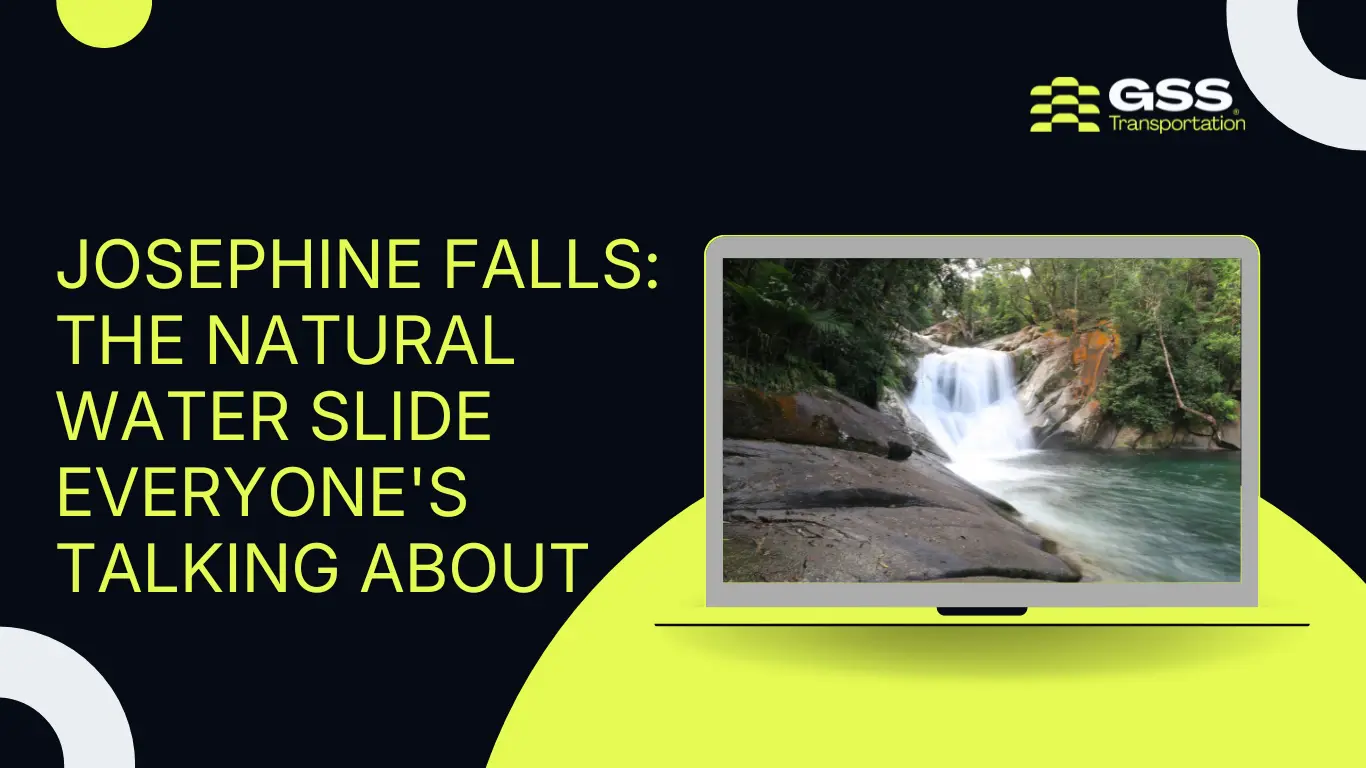
Most waterfalls are a look-and-leave kind of stop. Josephine Falls is not one of those. Set on the lower slopes of Bartle Frere, Queensland’s highest peak, inside Wooroonooran National Park, it’s built around a stretch of water-smoothed granite that functions less like a photo opportunity and more like a ride nature happened to build for free.
If your Far North Queensland itinerary has one waterfall stop on it, there’s a strong case for making it this one, provided you understand the conditions and respect them.
Where the Water Comes From
Josephine Creek begins as a trickle high on the south-eastern side of Bartle Frere’s summit. By the time it has travelled roughly 7.5 kilometres downhill, it has become a substantial creek that tumbles over granite boulders to form Josephine Falls before continuing on into the Russell River. The Josephine Falls visitor area was developed and opened to the public in the 1970s, and the site sits within the Wet Tropics World Heritage Area, a nearly 900,000-hectare listing proclaimed in 1988 that stretches roughly 450 kilometres between Cooktown and Townsville.
The Noongyanbudda Ngadjon people are the local Traditional Custodians of the Bartle Frere and Josephine Falls area, maintaining a close spiritual connection to this Country, and visitors are welcomed onto it by Queensland Parks and Wildlife Service on their behalf.
What Makes the Falls Different
The upper cascade at Josephine Falls runs down a section of granite polished smooth enough, at exactly the angle and flow needed, to work as a natural water slide. Riders scramble up beside the rock, ease into the current, and slide down into a pool at the bottom. It’s the reason the falls have a reputation well beyond typical waterfall tourism, and it’s genuinely popular with everyone from young kids to grandparents willing to give it a go.
The main swimming holes sit lower on the creek, closer to the car park, in a cold, clear pool framed by granite boulders and rainforest, large enough to comfortably absorb a steady stream of arrivals from the slide above.
Getting There
Josephine Falls sits 75 kilometres south of Cairns, off the Bruce Highway roughly 2 kilometres south of Mirriwinni, with an 8-kilometre approach road that’s accessible by conventional vehicle. The drive takes around 90 minutes, considerably more relaxed than the mountain switchbacks on the way up to the Atherton Tablelands. From the car park, it’s a 1.2-kilometre return walk through old-growth, World Heritage-listed rainforest to the viewing decks, wheelchair accessible as far as the upper platform, with stairs leading down to the bottom pool.
For anyone building a longer loop out of the day, combining Josephine Falls with a Babinda Boulders or Atherton Tablelands stop makes for a full and varied day trip south of Cairns, and a private transfer or tour service takes the stress out of navigating the turn-off and car park logistics yourself.
Planning note: Queensland Parks and Wildlife Service has scheduled car park upgrade works at Josephine Falls affecting access to the site and the eastern approach to the Bartle Frere trail through early 2027. It’s worth checking current park alerts before you travel, since closures and conditions change.
Is It Safe to Swim?
Under normal conditions, yes, and the water here is stinger-free and crocodile-free, which puts it well ahead of most coastal swimming options in Far North Queensland. But Queensland Parks and Wildlife Service is direct about the risk profile of this specific site: conditions at Josephine Falls can be extremely dangerous, and flash flooding can occur at any time of year, even when the weather at the falls themselves looks calm, because rain higher up the Bartle Frere catchment can send water levels rising rapidly and without warning.
Access to the top section of the falls is permanently prohibited, and QPWS is explicit that serious injuries and deaths have occurred in that restricted zone. People, including strong swimmers, regularly become isolated mid-creek or on the far bank and need rescuing, putting both themselves and rescuers at risk. The official guidance is worth repeating in full: obey all safety signage, swim only in the designated area, never jump or dive since there may be submerged objects, and leave the water immediately if it changes colour or rises, both signs of flash flooding starting upstream.
This isn’t a spot to push your luck in murky or fast-moving water, and it isn’t a scare tactic either. The warnings exist because this exact site has a documented history of serious incidents.
Tips for Visiting
- Go early on weekends. Josephine Falls is well known, and the car park and lower pools fill up fast once the day warms up.
- Bring reef-safe sunscreen and water shoes. The granite is smooth but the surrounding rocks and creek bed aren’t always kind to bare feet.
- Pack a picnic. There are shaded rest spots and a picnic area along the track, though the BBQ facilities have been out of service during recent maintenance periods, so don’t rely on them being available.
- Check conditions before you swim, not just before you leave home. Weather at Bartle Frere’s summit can differ sharply from what you see at the car park.
- Camping and pets aren’t permitted at Josephine Falls itself, so plan accommodation and animal care separately if you’re staying in the area overnight.
Nearby Stops Worth Combining
Josephine Falls sits within Wooroonooran National Park, which also includes Walshs Pyramid, a challenging standalone hike, the Goldsborough Valley section for canoeing and mountain biking, and the Palmerston (Doongan) section further north, home to the Mamu Tropical Skywalk. Further afield, the Babinda Boulders and the southern edge of the Atherton Tablelands are both realistic additions to the same day. If you’re driving yourself, stringing two or three of these together is straightforward. If you’d rather skip the planning and the driving, a Cairns airport transfer or private tour can be booked to cover the loop without you needing to worry about parking, timing or road conditions.
Final Thoughts
Josephine Falls earns its reputation the moment you see someone come off the granite slide into the pool below, and it earns it again about thirty seconds later when you’re standing in line to do it yourself. Add an easy rainforest walk, a genuinely easy drive from Cairns, and swimming free of stingers and crocodiles, and it’s hard to find a better return on a couple of hours out of your day, provided you treat the site’s flash flood risk with the seriousness Queensland Parks and Wildlife Service asks visitors to give it.