
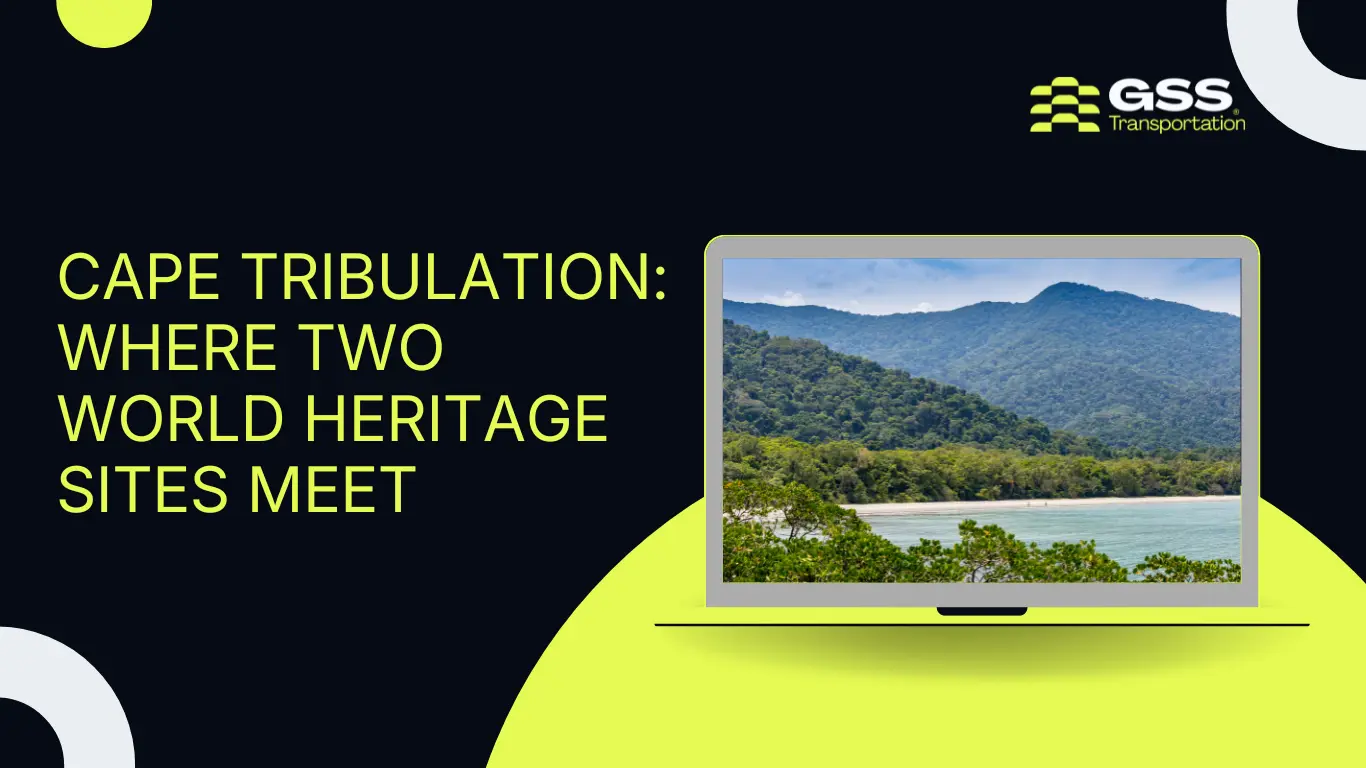
Captain Cook named Cape Tribulation in 1770, after his ship ran aground on the reef nearby, and the name has stuck through everything the place has been since. It’s the point where the Daintree Rainforest, one of the oldest tropical rainforests on Earth at an estimated 180 million years old, runs straight down to meet the Great Barrier Reef, without so much as a road or a car park in between. There aren’t many places on the planet where two World Heritage-listed ecosystems touch each other directly, and this is one of them.
Getting There: The Ferry Is Non-Negotiable
If you’re travelling north from Cairns or Port Douglas, there’s no way around the Daintree River ferry; there’s no bridge, and there isn’t going to be one. According to Tropical North Queensland’s official travel advisory, the ferry runs continuously from 5am to midnight, and the crossing itself takes about 10 minutes. It’s a small operation and it can back up, particularly between roughly 10am and midday heading north and 3pm to 5pm heading south during the busier July to September period, so travelling before 10am and returning in the evening avoids the worst of it. Tickets can be bought online in advance, at the booth on the southern side before 5pm, or on board the ferry itself.
Once across, Cape Tribulation sits about 35 kilometres further north, and the entire road is sealed the whole way, no 4WD required, right up to where the bitumen ends just past the last accommodation cluster.
Starting point | Distance / time |
Cairns to Cape Tribulation | ~2.5 hours drive |
Port Douglas to Cape Tribulation | ~1.5 hours drive |
Daintree ferry crossing | ~10 minutes |
Ferry to Cape Tribulation | ~35 km, roughly 40–50 minutes |
What’s Actually Between the Ferry and the Cape
The drive itself is most of the experience, not just the means of getting there. A handful of stops sit along that 35-kilometre stretch worth building time in for:
- Alexandra Range Lookout, just after leaving the ferry, with sweeping views back over the Daintree River mouth and Snapper Island
- Daintree Discovery Centre, offering elevated boardwalks, an aerial walkway, and a canopy tower for a proper look into the rainforest at every level, rather than just from the road
- Cow Bay and Thornton Beach, both quieter, less-visited beach stops along the way
- Daintree Ice Cream Company, a genuine local institution serving tropical-fruit flavours grown on-site, and close to a mandatory stop for almost everyone who drives this road
- Emmagen Creek, just before the road’s northern end, with a short walking trail to a clear freshwater swimming hole complete with a rope swing
At Cape Tribulation Itself
Two interpretive boardwalks are the main structured activities right at the Cape, according to the Destination Daintree visitor guide: the Dubuji Boardwalk, a 1.8-kilometre loop through forest and mangroves exiting onto Myall Beach, and the Maardja Botanical Walk, a shorter boardwalk through coastal lowland rainforest about 10 minutes south of the main township. Both are self-guided and manageable for most fitness levels, giving a genuine sense of the rainforest without committing to a longer guided trek.
Beyond the boardwalks, the beach itself is the other main draw, a genuinely striking stretch of sand backed directly by rainforest rather than resort development, with a scattering of small cafés (Turtle Rock and Mason’s among the better known) along the road nearby.
Where the Sealed Road Ends
This is worth knowing before you plan a self-drive trip: the bitumen ends just north of the main Cape Tribulation accommodation cluster. From there, the Bloomfield Track continues roughly 100 kilometres north to Cooktown, and it’s 4WD only, unsealed, and genuinely rough in places, with sudden flooding, fallen trees, and potholes a real possibility even in dry season. It’s consistently rated as one of the most scenic short 4WD routes in Queensland, and plenty of dedicated tours run it, but it isn’t a route to attempt in a standard rental car, and conditions are worth checking before setting off regardless of vehicle.
For most visitors on a day trip or short stay, the Bloomfield Track isn’t the point of the visit anyway; Cape Tribulation itself, at the end of the sealed road, is already a genuinely remote-feeling destination without needing to push further north.
A Place With a Recent, Interesting History
Cape Tribulation’s tourism story is younger than you might expect. Backpackers effectively discovered it in the early 1980s, and it became a stop on the loosely defined “India-Goa-Bali” trail of the era. Its current protected status is tied directly to a genuine environmental fight: the 1982-84 Bloomfield Road protests, opposing further road development through the rainforest, were a significant factor in the area’s eventual World Heritage listing in 1988. The first tours in the area only began in 1981, and the first proper accommodation only a few years before that, meaning the whole tourism industry here is barely older than living memory, unusual for a destination this well known internationally.
How Cape Tribulation Differs From Mossman Gorge
It’s easy to conflate the two, since both sit within the Daintree National Park, but they’re genuinely different experiences. Mossman Gorge is the accessible, half-day-friendly southern gateway into the Daintree, with a shuttle bus, boardwalks, and swimming holes close to Port Douglas. Cape Tribulation is further north again, past the ferry crossing, and represents the point where the rainforest and reef genuinely converge, a full-day commitment given the distance rather than a quick add-on.
Wildlife You Might Actually See
The Daintree’s biodiversity is a genuine draw beyond the scenery. Southern cassowaries move through this stretch of rainforest, and while sightings aren’t guaranteed the way they can be around Mission Beach further south, the area’s road signage and reduced speed zones reflect how seriously the region takes their protection. Tree kangaroos, an animal most visitors don’t expect to find in a rainforest at all, are native to this specific stretch of Far North Queensland and occasionally spotted on guided night walks. The Daintree River itself, back before the ferry crossing, is genuine saltwater crocodile habitat, and river cruise operators build their commentary heavily around spotting them along the banks. None of this is guaranteed wildlife-watching in the way a zoo would be, but it’s part of why a guided walk or cruise tends to reveal considerably more than a self-guided drive-through would on its own.
Best Time to Visit
Cape Tribulation runs on the same broad seasonal pattern as the rest of Far North Queensland: a drier period from roughly May to October with more comfortable walking conditions and lower humidity, and a wetter, greener period from November to April when the rainforest is at its most dramatic but afternoon storms are a regular feature. The Daintree ferry itself is more prone to queuing delays during the peak dry-season months of July through September, simply because that’s when visitor numbers are highest, so an early start matters even more during that window than it does the rest of the year.
Where to Stay if You’re Not Doing It as a Day Trip
Given the distance involved, an overnight stay lets you actually settle into the pace of the place rather than spending half the day driving. Accommodation options range from backpacker-style dorms through to private eco-cabins, with several properties sitting directly on or near Cape Tribulation Beach itself. Camping is also available close to the beach for those wanting an even more immersed stay. Staying overnight also opens up the option of a guided night walk, considerably better for spotting nocturnal wildlife than anything possible on a same-day return trip from Cairns or Port Douglas.
Getting There
Self-driving works well given the fully sealed road, and it’s the most flexible way to build in stops at the Discovery Centre, Cow Bay, and Emmagen Creek along the way. Guided day tours from Cairns and Port Douglas are the most common way to visit for those without a hire car, typically bundling Mossman Gorge, a Daintree River cruise, and Cape Tribulation itself into one long day. Private transfer suits travellers heading up for an overnight stay rather than a single tour-paced day, since it removes the ferry-queue timing pressure that comes with a fixed group itinerary.
Book Your Transfer
- Cairns Airport to Port Douglas, the shortest run for onward travel to Cape Tribulation
- Full Price List, all routes and vehicle types
For the southern, more accessible entry point into the same national park, see our guide to Mossman Gorge. For how a full Daintree day fits into a broader itinerary, see Cairns in 3 Days.
Common Questions About Cape Tribulation
Around 2.5 hours by road, or roughly 1.5 hours from Port Douglas. The drive includes a mandatory Daintree River ferry crossing, since there's no bridge across the river.
No, the road is fully sealed all the way from the Daintree ferry to Cape Tribulation. A 4WD is only required if continuing north beyond Cape Tribulation onto the unsealed Bloomfield Track toward Cooktown.
The crossing itself takes about 10 minutes, and the ferry runs continuously from 5am to midnight. Queues can build during the busier July to September period, particularly mid-morning heading north and mid-afternoon heading south.
Mossman Gorge is the closer, more accessible southern gateway into the Daintree National Park, doable as a half-day trip. Cape Tribulation sits further north across the Daintree River ferry, and represents the point where the rainforest meets the reef, a genuine full-day commitment given the extra distance.
Yes, guided day tours from Cairns and Port Douglas run regularly, typically combining Cape Tribulation with Mossman Gorge and a Daintree River cruise in a single full day.
It's rated as one of Queensland's most scenic short 4WD drives, but it's a genuinely different undertaking from a standard Cape Tribulation visit, unsealed, 4WD-only, and best approached with a dedicated tour or proper vehicle rather than as a casual extension of a day trip.