
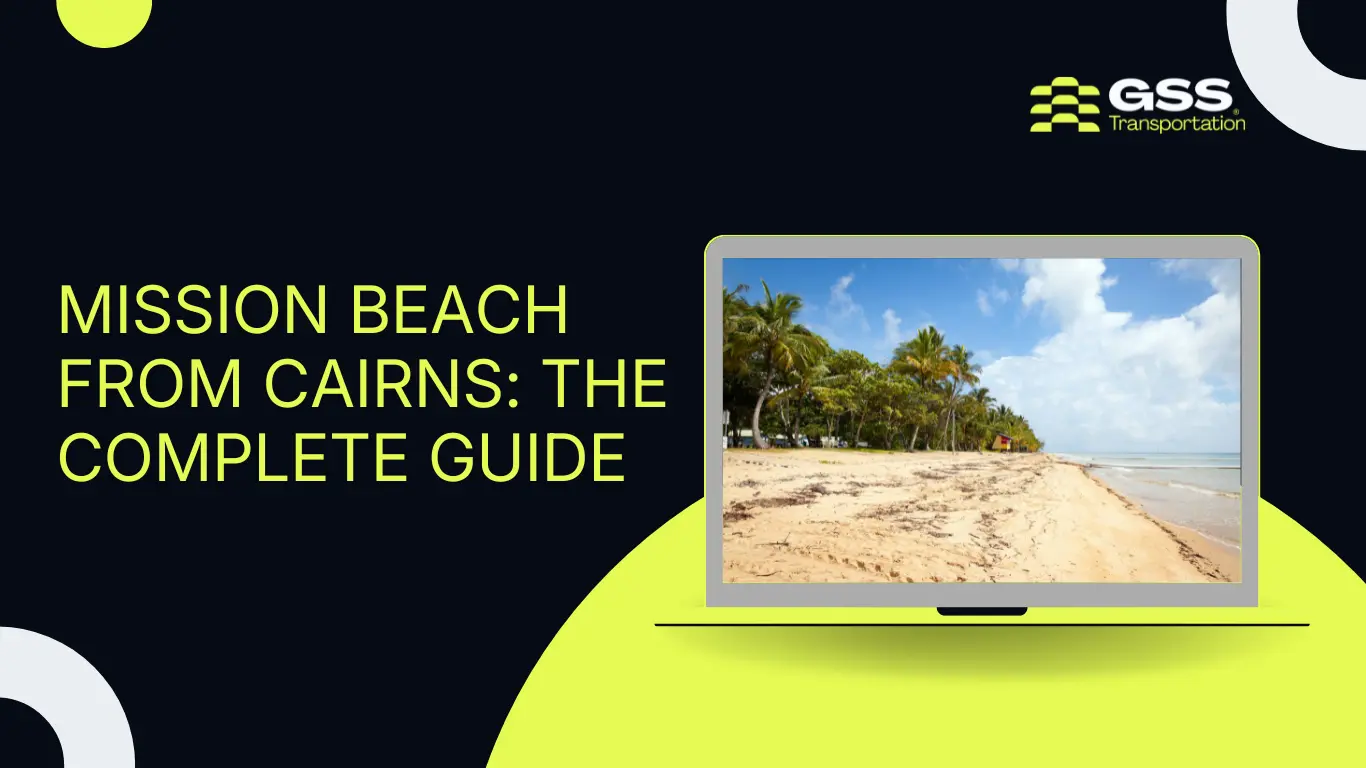
Most first-time Cairns visitors never make it to Mission Beach, and that’s usually down to distance rather than lack of interest. It sits far enough south that it doesn’t fit neatly into a quick day trip, which is exactly why it’s stayed quieter and less developed than Palm Cove or Port Douglas. What you get in exchange is 14 kilometres of largely untouched beach, an island 20 minutes offshore, whitewater rapids 45 minutes inland, and a genuine chance of a cassowary wandering through the car park. It’s less a single attraction than three different landscapes meeting in one place: reef, rainforest, and river.
How Far It Actually Is
Mission Beach sits roughly 120 to 140 kilometres south of Cairns, and the honest answer on drive time depends on which source you trust. Some put it at a brisk 90 minutes, others closer to 2 hours, and the real figure lands somewhere in between depending on traffic and whether you stop along the way. Budget 1 hour 45 minutes to 2 hours from Cairns Airport, following the Bruce Highway south and turning off toward Mission Beach near El Arish.
Starting point | Distance | Typical drive time |
Cairns Airport / City | ~120–140 km | 1h 45m – 2h |
Innisfail | ~40 km | 35–45 minutes |
Tully | ~25 km | 25–30 minutes |
Given the distance, Mission Beach works better as a genuine overnight stop or a full day out rather than a rushed half-day detour, though it’s a common inclusion on longer Cassowary Coast day tours that also take in Josephine Falls or Paronella Park along the way.
Dunk Island: The Reason Half the Photos Exist
The offshore drawcard is Dunk Island, part of the Family Islands group and sitting inside the Great Barrier Reef Marine Park, only around 20 minutes from Mission Beach by boat. Ferries run from Clump Point Marina, a short five-minute drive from the village, and both a return ferry and small-group snorkelling tours are available depending on whether you want a self-guided day or a more structured trip.
Brammo Bay is the main beach on arrival, sheltered and palm-lined, while Muggy Muggy Beach on the far side of the island is a roughly 40-minute walk through rainforest and coastal woodland, and considerably quieter. Much of the island is protected national park, home to Ulysses butterflies, native birdlife, and sea turtles in the surrounding waters. Camping facilities on Dunk Island have recently been upgraded with new glamping-style sites for those wanting to stay rather than do it as a day trip.
The Reef, Minus the Long Boat Ride
Cairns gets the reputation for reef access, but Mission Beach is genuinely closer to the outer reef than Cairns is, which is a detail most first-time visitors don’t realise. The trade-off is fewer operators and less choice in tour style compared with the bigger Cairns-based fleet, but for travellers based at Mission Beach already, it means a shorter crossing and a smaller, more personal boat experience rather than a large multi-deck catamaran.
Tully River: Whitewater 45 Minutes Inland
Roughly three-quarters of an hour from Mission Beach, the Tully River is one of the most consistently run whitewater rafting rivers in Australia, with Grade 2 to 3 rapids suited to first-timers as well as more experienced paddlers. Full-day rafting trips typically run in the vicinity of $150 all-inclusive, and it’s a popular add-on for visitors who want more adrenaline than a beach day alone provides. Tully itself holds the unofficial title of one of Australia’s wettest towns, which says something about how green everything around the river looks by comparison to the coast.
Cassowaries: The Local Celebrity
Mission Beach is one of the most reliable places in Australia to spot a southern cassowary in the wild, sometimes wandering along roadsides or even through car parks in the area. They’re a genuinely significant, endangered species, and the region takes their protection seriously, including reduced speed zones on certain roads specifically to protect them. Seeing one is exciting, but keeping a respectful distance matters. Cassowaries are large, powerful birds capable of serious injury if they feel threatened or are provoked, particularly if people get too close while they have chicks nearby.
What a Day (or Few) Actually Looks Like
Most visitors build their time around some combination of:
- A half or full day at Dunk Island, either self-guided via the ferry or on a small-group snorkelling tour
- Whitewater rafting on the Tully River, usually as its own dedicated half-day or full-day trip given the drive time involved
- Walking the Mission Beach foreshore, a roughly 4-kilometre coastal trail through beach and rainforest fringe with genuinely good odds of wildlife sightings
- A stop at Josephine Falls or Paronella Park on the way down or back, since both sit reasonably close to the same general corridor south of Cairns
Given how spread out these activities are, travellers with only a single day tend to pick one focus (usually Dunk Island) rather than trying to fit everything in, while those staying two or three nights can comfortably work through all of it at a relaxed pace.
A Region That’s Weathered a Lot
Mission Beach and the wider Cassowary Coast have been hit hard by cyclones over the years, including significant damage during Cyclone Larry in 2006 and Cyclone Yasi in 2011, both of which affected the rainforest canopy, local infrastructure, and the cassowary population that calls the area home. The region has rebuilt steadily since, and the rainforest has regenerated to the point where much of it looks as lush as ever, but it’s part of the area’s character worth knowing rather than glossing over, particularly given how directly it ties into why cassowary conservation efforts here are taken so seriously. Visiting during the official cyclone season (November to April) carries the same general considerations as anywhere else on this stretch of coast: rare for most visitors to be directly affected, but worth checking the Bureau of Meteorology’s outlook if travelling during the January to March peak.
Where to Stay
Mission Beach isn’t one single town but a string of small communities strung along the coast, including Mission Beach village itself, Wongaling Beach, South Mission Beach, and Bingil Bay. Accommodation ranges from budget-friendly backpacker lodges and holiday units through to boutique eco-resorts tucked into the rainforest, generally at a noticeably lower price point than the more polished resort towns further north. Given how spread out the area is, it’s worth checking which specific stretch of the coast your accommodation sits on relative to Clump Point Marina if the Dunk Island ferry is a priority, since a few kilometres can mean the difference between a five-minute drive and a twenty-minute one.
What to Pack
Insect repellent earns its keep here more than almost anywhere else in the region, given the rainforest setting. Reef-safe sunscreen, swimwear, and a light rain layer cover most of the outdoor activity across both seasons. For the Tully River rafting trip specifically, operators generally provide wetsuits and safety gear as part of the package, so old clothes and secure footwear that can get wet are the main things to bring along rather than specialist gear. A decent camera or phone is worth having charged, particularly if a cassowary happens to wander past.
Getting There
Self-driving is the most flexible option, and the most common way to arrive, following the Bruce Highway south from Cairns and turning off near El Arish onto Cassowary Drive into Mission Beach itself.
Guided day tours from Cairns run regularly, typically departing early (around 7:30am) and combining Mission Beach and Dunk Island with a stop at Josephine Falls or a swim at a freshwater creek along the way, given how much of the day is otherwise spent driving.
Private transfer suits travellers heading to Mission Beach for an overnight or multi-night stay rather than a single tour-style day trip, since it gets you there in one direct run without the scheduled stops and group pace of a day tour.
Best Time to Visit
Mission Beach follows the same broad seasonal pattern as the rest of Far North Queensland: a drier, cooler season roughly May to September with temperatures in the high teens to high twenties, and a warmer, more humid green season from December to March, with the reliable afternoon storms typical of the wider region. Given how much of the appeal here is outdoor and water-based, the drier months tend to make for more comfortable rafting and snorkelling conditions, though the rainforest looks genuinely lush during the wetter months for those visiting primarily for the scenery.
Book Your Transfer
- Cairns Airport to Mission Beach, direct transfer for overnight and multi-night stays
- Cairns Airport to Innisfail, useful staging point roughly 40 minutes short of Mission Beach
- Full Price List, all routes and vehicle types
If you’re extending the trip further south along the same corridor, our guides to Paronella Park and Babinda Boulders cover the other stops worth combining with a Mission Beach visit.
Common Questions About Mission Beach
Roughly 120 to 140 kilometres, with the drive taking between 1 hour 45 minutes and 2 hours depending on traffic and the exact route.
Ferries and water taxis depart from Clump Point Marina, a short drive or walk from the village, with the crossing itself taking around 20 minutes. Both a self-guided return ferry and guided snorkelling tours are available.
Given the drive time, most visitors get more out of an overnight or multi-night stay than a rushed single day. That said, guided day tours from Cairns do run regularly and typically combine Mission Beach and Dunk Island with a stop at Josephine Falls or a swimming hole along the way.
It's one of the most reliable places in Australia to spot one in the wild, including occasionally near roadsides or car parks in the area. Keeping a safe, respectful distance is important, since they're large, powerful birds that can act defensively if they feel threatened.
About 45 minutes inland, making it a popular half-day or full-day add-on to a Mission Beach stay for travellers wanting whitewater rafting alongside the beach and island time.
The drier season, roughly May to September, offers more comfortable conditions for rafting and snorkelling. The wetter season from December to March brings more humidity and regular afternoon storms, but a noticeably greener, more dramatic rainforest.